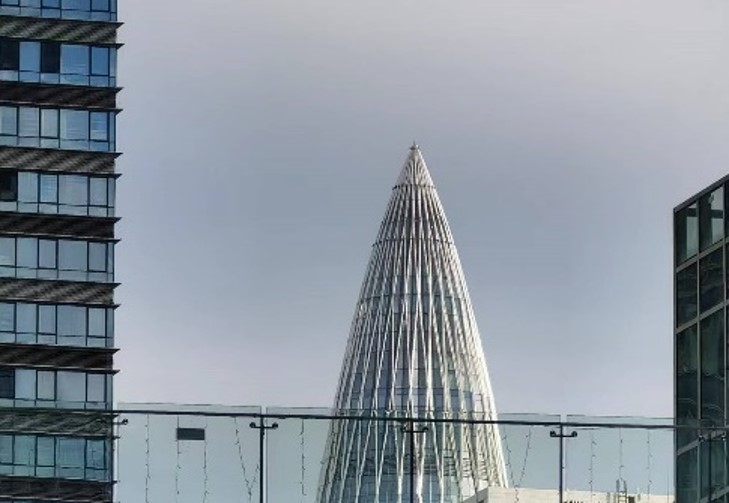
For a long time, many people have been wondering whether to choose copper or zinc as a building material, and what are the advantages and disadvantages of each. Let’s take a closer look at these two high-end metal building materials so that we can know more clearly how to choose.
Copper is a metal element with the chemical element symbol Cu and the atomic number 29. It is located in the fourth period IB group in the periodic table. The density of copper is 8.92g/cm³, the melting point is 1083.4±0.2℃, and the boiling point is 2567℃ (some data also mention the boiling point is 2595℃). It is a purple-red metal with a slightly hard, extremely tough, wear-resistant, and good ductility, thermal conductivity, electrical conductivity and corrosion resistance. Copper is abundant in nature, has excellent performance, and is easy to process. Therefore, it is second only to aluminum in the consumption of non-ferrous metal materials in China, and is widely used in electrical, mechanical manufacturing, construction industry, transportation and other fields. Copper and its alloys are very stable in dry air, but in humid air, a layer of green basic copper carbonate Cu₂(OH)₂CO₃, commonly known as patina, will form on its surface.

Zinc, also known as zinc-copper-titanium alloy, is a high-grade metal alloy plate made by melting high-grade electrolytic zinc with a purity of up to 99.99% and adding precisely quantified amounts of copper and titanium. Its composition mainly includes 99.995% pure zinc, as well as a small amount of alloy materials such as copper (0.08%) and titanium (0.06%). Zinc plate has many excellent properties, such as extremely long service life (depending on the environment, it can be used for 70 to 100 years), low maintenance (the passivation layer is integrated with the plate, does not peel off or fall off, and surface scratches can be self-repaired), rich expressiveness (can be perfectly combined with a variety of materials), excellent ductility (can achieve various architectural shapes) and environmental protection (in line with the concept of sustainable development), etc. In addition, zinc plate also has good physical and mechanical properties, such as thermal conductivity of 109W/m·k, melting point of 418℃, longitudinal thermal expansion coefficient of 0.022mm/m·℃, etc. There are also a variety of thickness and width specifications to choose from, such as thickness including 0.7mm, 0.8mm, 1.0mm, 1.5mm, etc., and width including 330mm, 430mm, 530mm, etc.

As building materials, zinc and copper each have unique pros and cons.
Zinc
#### Pros
1. **Strong self-healing ability**: After the zinc plate is scratched during transportation or installation, due to the oxidizing property of zinc, the zinc element will react with water, oxygen and carbon dioxide in the atmosphere again, and the scratched area will The oxide layer is formed again, and the color will be infinitely close to the color of the surrounding plates, which has the characteristics of self-healing.
2. **Strong impact resistance**: Zinc plate has undergone special surface treatment processes (such as pickling and phosphating), making it difficult for acid and alkali substances to corrode. At the same time, titanium, as one of the hardest metals on the earth, is difficult to Destroyed by external forces, it has a significant effect on consolidating the architectural form.
3. **Long service life**: Using titanium metal as the material and relying on mature manufacturing technology, the zinc plate has a long service life and can even be used permanently.
4. **Strong self-cleaning ability**: The passivation layer on its surface is highly integrated with the board. It will passivate and protect the board by itself, and has a certain self-healing function, reducing maintenance costs.
5. **No need for painting**: Zinc plate has natural color and luster. Compared with building materials that need to be painted, it not only saves costs but is also environmentally friendly and can meet a variety of construction needs.
#### Con
**Special colors need to be customized**: The zinc plate itself has a single color, and there are only a few other colors to choose from. If you have special color requirements, you need to contact the manufacturer for customization.
https://vt.tiktok.com/ZSYoCP6R3/
Copper
#### Pros
1. **Strong corrosion resistance**: Copper has extremely high chemical stability, can maintain its performance under various environmental conditions, and can form a strong, non-toxic passivation protective layer on the surface.
2. **Good physical properties**: Copper has high thermal conductivity and electrical conductivity, high tensile strength, good plasticity and ductility, and is easy to weld.
3. **Excellent fire resistance**: Copper is a non-combustible material, and its fire resistance is better than other traditional materials and metal materials.
4. **Elegant and beautiful appearance**: The appearance of copper is grand and beautiful, and its colors are diverse, which can meet different architectural needs.
5. **Strong processing adaptability**: Copper can adapt to the design of various complex shapes and be processed into various types of curved lines, giving architects a huge space to play.
6. **Long service life**: The stable protective layer makes the copper plate have a service life of more than 100 years.
7. **Low maintenance cost**: Copper’s performance and price are relatively high, and the maintenance cost is very low.
#### Cons
1. **Higher cost**: Compared with other metal materials, the price of copper is higher, which may increase the overall cost of the project.
2. **Surface treatment challenges**: Surface treatment of copper plates is difficult and requires professional technology and craftsmanship.
3. **Construction is difficult**: Since copper has high requirements on design, processing, installation and other aspects, construction is relatively difficult.
https://vt.tiktok.com/ZSYoCHbn1/
As building materials, copper and zinc each have unique advantages. The following are some of the significant advantages of copper over zinc:
1. **Richer colors and textures**: Copper curtain walls have a grand and beautiful appearance with diversified colors, which can meet a variety of architectural needs. Ungilded copper buildings usually have a crab-green color, while gilt copper buildings are resplendent and have a unique visual effect. In contrast, titanium-zinc plates are mainly light gray. Although they have a natural luster, they may not be as rich in color changes as copper.
2. **Higher corrosion resistance**: Copper is a metal with extremely high chemical stability and can maintain its performance under various environmental conditions. Even in extremely corrosive atmospheric environments, copper plates can form a strong, non-toxic passivation protective layer, commonly known as “patina”. This protective layer is very stable and can protect the copper plates from corrosion for a long time. Although zinc plate also has good corrosion resistance, its corrosion resistance may be slightly inferior to copper.
3. **Better fire resistance**: The melting point of copper is as high as over 1000 degrees, so the fire resistance of copper buildings is very excellent. In contrast, although zinc plate also has some fire resistance, it may not perform as well as copper under extreme high temperature conditions.
4. **Unique cultural value**: As a building material with a long history, copper has profound cultural heritage and unique cultural value. Copper buildings can often become urban landmarks and have extremely high artistic and ornamental value. As a relatively new building material, titanium-zinc panels have been widely used in modern architecture, but their cultural value may still need to be further explored.

Please note that the above advantages and disadvantages are based on general descriptions. Other factors need to be considered in specific project applications, such as design requirements, cost budget, construction conditions, etc. When choosing to use titanium-zinc or copper curtain walls, factors such as project needs, budget, and construction conditions should be comprehensively evaluated.
As China’s leading provider of metal building decoration solutions and manufacturing services, Gens Metal not only has profound copper design and processing skills, but also provides a wide range of titanium-zinc roofing products and related design and installation services. It is worthy of your trust. Reliable business partner!