The Chiwen, also known as the chiss or the owl-tail, is a sacred animal in ancient Chinese myths and legends. It is generally considered the ninth son of a dragon. (The nine sons of the dragon are: 囚牛Qiu Niu (qiú niú), 睚眦Ya Zi (yá zì), 嘲风Chao Feng (cháo fēng), 蒲牢Pu Lao (pú láo ), 狻猊Suan Ni (suān ní), 霸下Ba Xia (bà xià), 狴犴Bi An (bì àn), 负屃Fu Xi (fù xì ), 螭吻Chi Wen(chī wěn). In traditional cultures, Chiwen is often molded into a characteristic dragon head with a four-legged snake-like body but no tail. This god beast has a wide mouth and a strong appetite, likes to look around in dangerous places, and has the special ability to swallow fire.
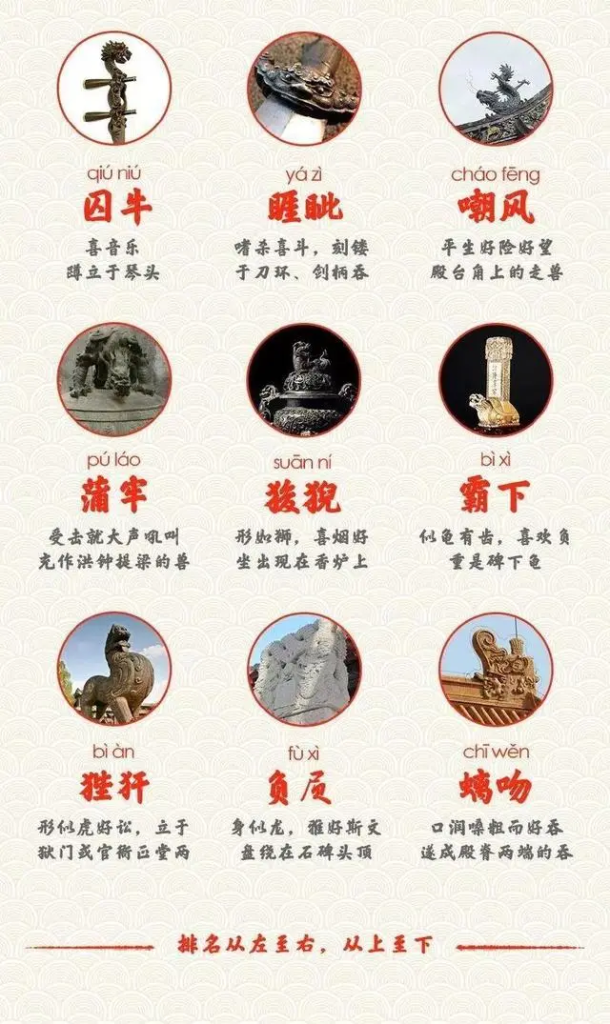
The nine sons of Chinese Dragon Source: Baidu.com
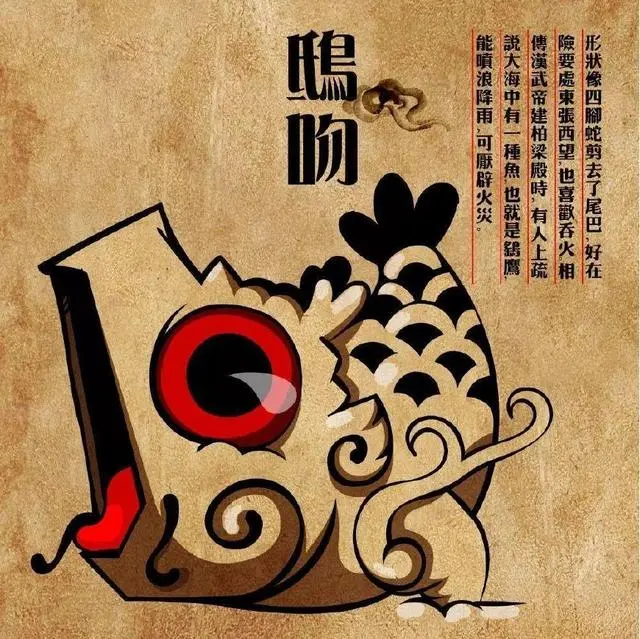
Chiwen, the nineth son of Chinese Dragon Source: Baidu.com
The use of Chiwen in construction mainly includes the following aspects:
Ornamental function: The Chiwen serves as the ornamental component of the roof ridge, which has the function of beautifying the building. Its unique shape and rich symbolic meaning make it an indispensable part of ancient architecture.
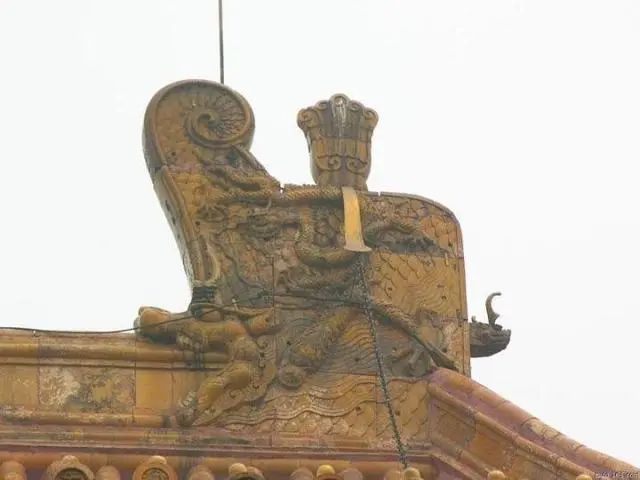
Chiwen, the ornamental part on roof ridge Source: Baidu.com
Fixing Roof: The fin-like structure at the tail helps secure the roof ridge and prevents rain from infiltrating, thus enhancing the stability and durability of the building.
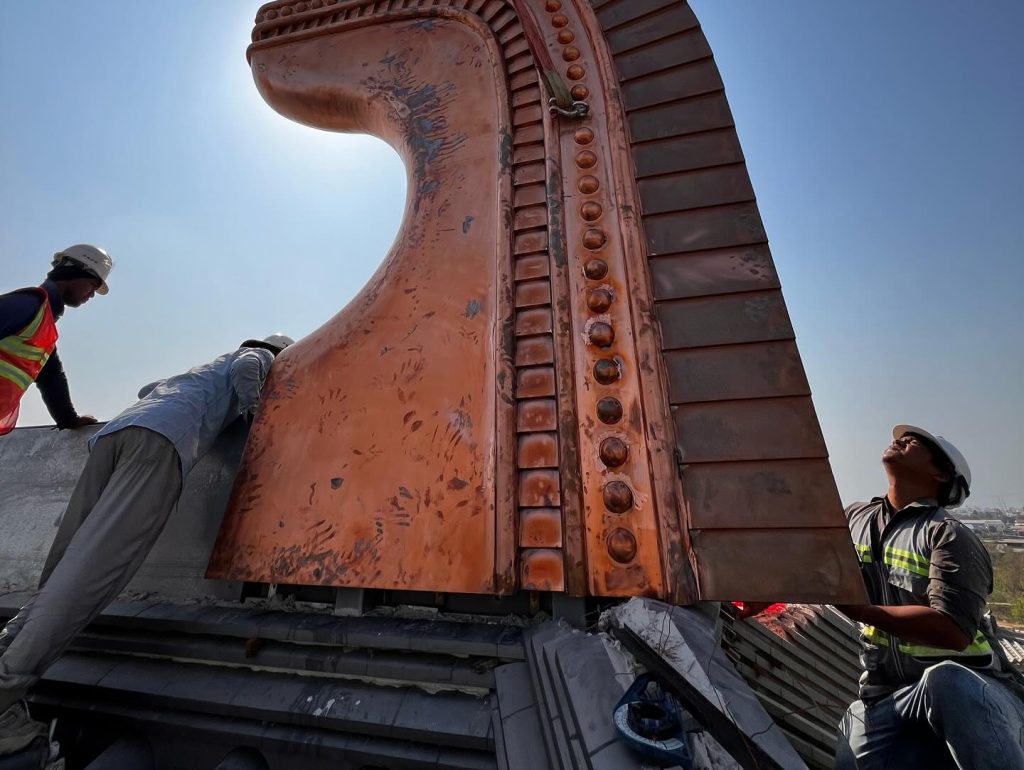
A copper Chiwen (Shibi) being installed By courtesy of 大河瓦taigakawara
Fire-Avoidance: According to legend, the Chiwen’s can spray rain, so they are placed on the roof to avoid fire. This design is not only practical, but also reposes the ancients’ expectation of safety and auspicious.
Cultural symbol: the Chiwen symbolizes the elimination of disasters, auspiciousness and the supremacy of imperial power, reflecting the pursuit and yearning of the ancient people for a better life. Its image and position have been gradually fixed in the development of history, reflecting the ancient Chinese people’s worship of dragon and phoenix and the pursuit of architectural art.
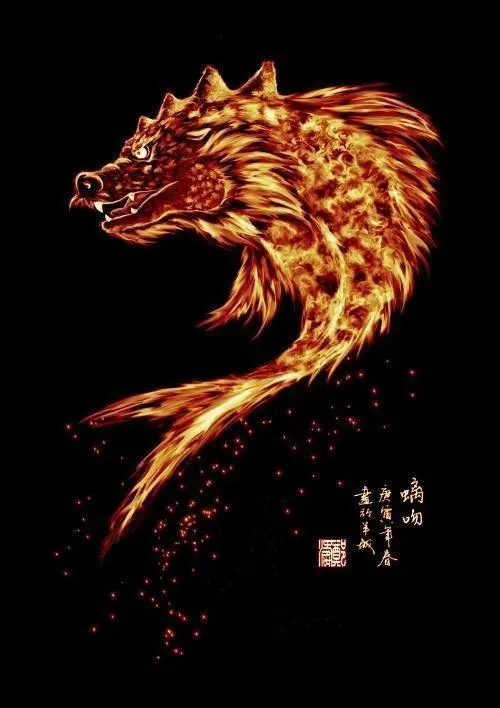
Chiwen, a cultural symbol Source: Baidu.com
Through these functions and symbolic meanings, the Chiwen not only plays an important role in architectural technology and art, but also bears profound cultural connotation and historical value.
The material for making Chiwen has changed with the development of history and the progress of technology, and has gone through the following stages:
Northern and Southern Dynasties: The material of the Chiwen is mainly naked pottery, which has not been glazing treatment.
After the Late Tang Dynasty: The material gradually evolved from bare pottery to glazed pottery, which makes the appearance of the Chiwen more beautiful and durable.
Song and Liao and Jin Dynasties: Due to the expansion of the scale of the building, some large-scale Chiwen’s need to be made by multiple pieces of colored glass splicing, such as the Great Hall of Huayan Temple on Datong, Shanxi.
Ming and Qing period: At this time, the Chiwen more than use solid colored glass material, this material not only beautiful, and fireproof performance, not easy to cause fire.
The selection and use of these materials not only reflect the technical level and aesthetic concept of the ancient craftsmen, but also reflect the social and economic conditions and cultural background of different historical periods.
The Japanese culture’s interpretation of Chiwen has many similarities with that of China, but there are some significant differences. Here are the main differences:
Name and Image
China: Chiwen, also known as owl tail, chi kiss, is regarded as the ninth son of the dragon, usually presented as the dragon-shaped head swallowing the ridge, symbolizing fire prevention and evil spirits.
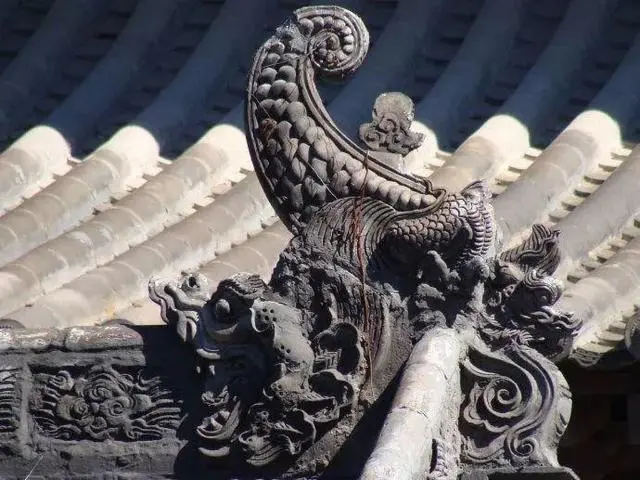
Ancient Chinese Chiwen Source: Baidu.com
Japan: In Japan, it is called “Shibi”,often take the form of a shachihoko (short as Shachi). It is evolved from Chinese Chiwen, but there are some details. The most famous example is the Kimura in Nagoya Castle, Aichi Prefecture, Japan, which shows its importance in culture and architecture.
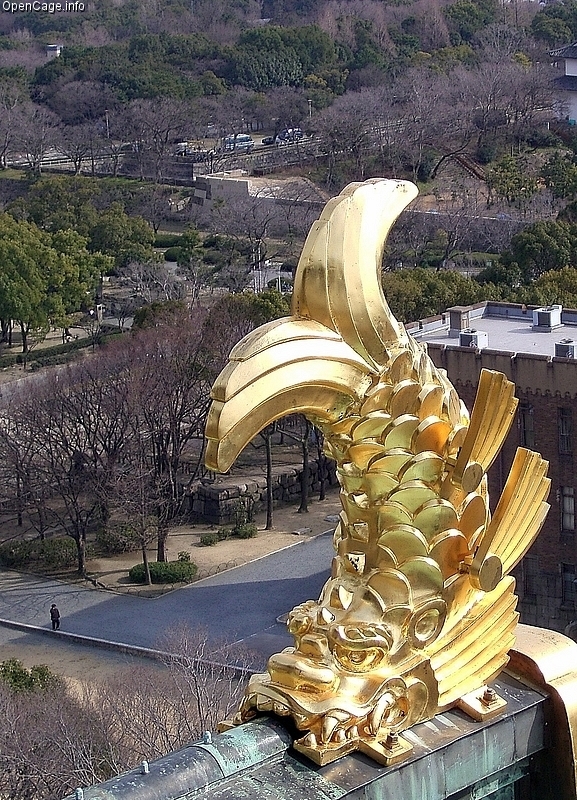
Shibi in the form of a shachihoko Source: Wikipedia
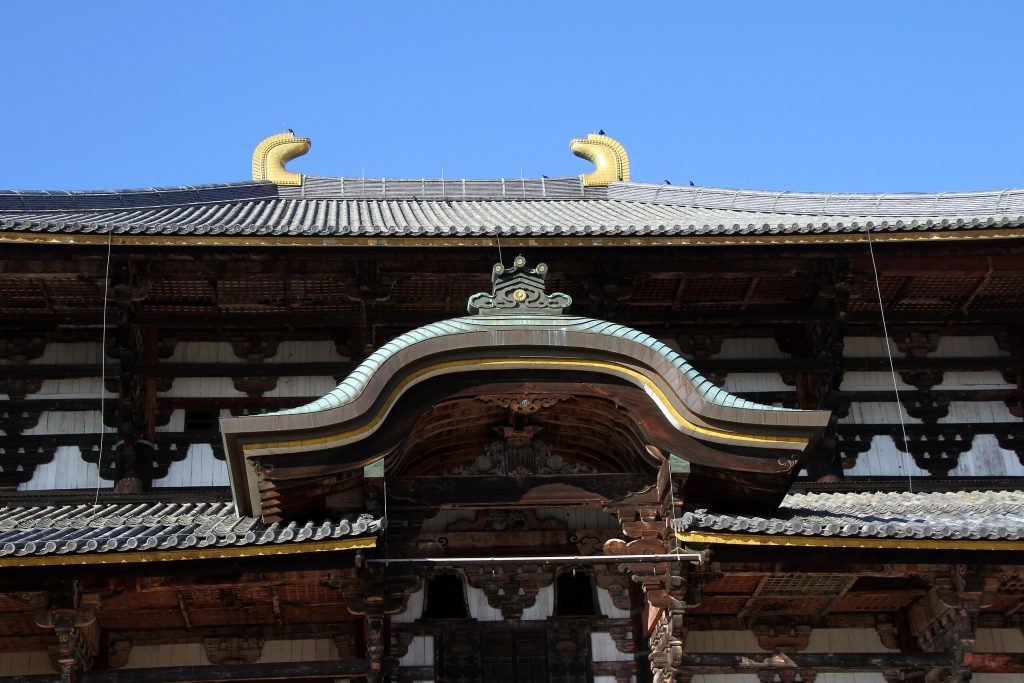
Shachihoko on Tōdaiji Kondō (Nara) Source: Wikipedia
Symbolic meaning
China: The Chiwen is mainly used for fire prevention and evil spirits. It symbolizes authority and strength, and also represents people’s yearning for a better life and awe of nature.
Japan: The symbolism of fire prevention has been inherited, but in Japanese culture there is a special emphasis on its role as a counter to evil spirits, to expel evil spirits and to protect buildings.
Cultural heritage
China: The Chiwen is an important ornamental element in ancient Chinese architecture, embodying the skill and creativity of ancient craftsmen and symbolizing the idea of harmony between humanity and nature between man and nature.
Japan: In Japan, not only absorbs the cultural connotation of China, but also integrates the local Shinto faith in Japan, and becomes an indispensable part of the traditional architecture, symbolizing the prevention and defense against natural disasters.
In general, although Japanese cultural interpretations of the Chiwen have much in common with Chinese interpretations, there are significant differences in specific cultural details and symbolic emphasis. These differences reflect the uniqueness of their respective cultural backgrounds and their specific understanding of traditional architectural elements.
As a professional solution provider for the design, production and installation of architectural metals, especially copper, Gens Metal has also been involved in large and small Buddhist temple construction projects, including the recent example of the Copper Chiwen at the Maha Prajna Temple in Phnom Penh, Cambodia. The whole project consisted of 35 Chiwen’s, made of copper. Gens Metal provided a perfect design and production plan, which made the Chiwen and temple buildings form a unified beauty in shape and color. The production and delivery were completed in a short time than expected. Get high praise from the owner.
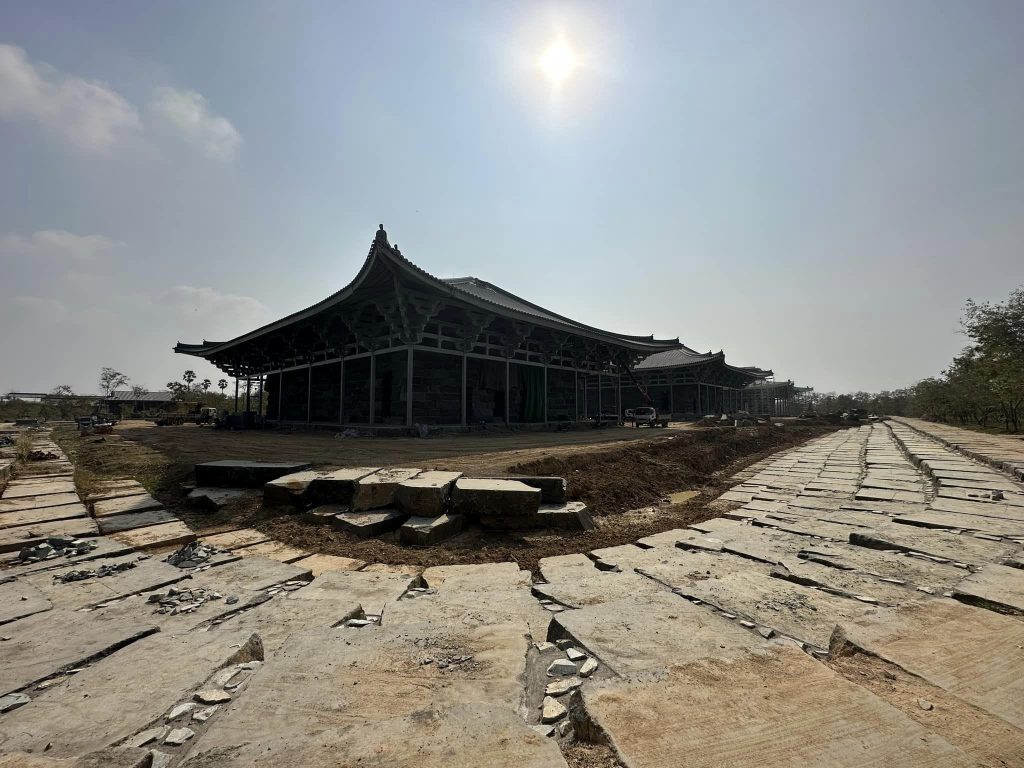
Maha Prajna Temple with copper Chiwen’s in Phnom Penh
The craft of Chiwen has a long history and is an important part of traditional oriental architectural art. The application of Chiwen in certain specific buildings such as Buddhist temples is also more and more extensive in modern times. The true color of copper increases the solemnity of Chiwen. The following are the main manufacturing process steps of the copper alloy Chiwen:
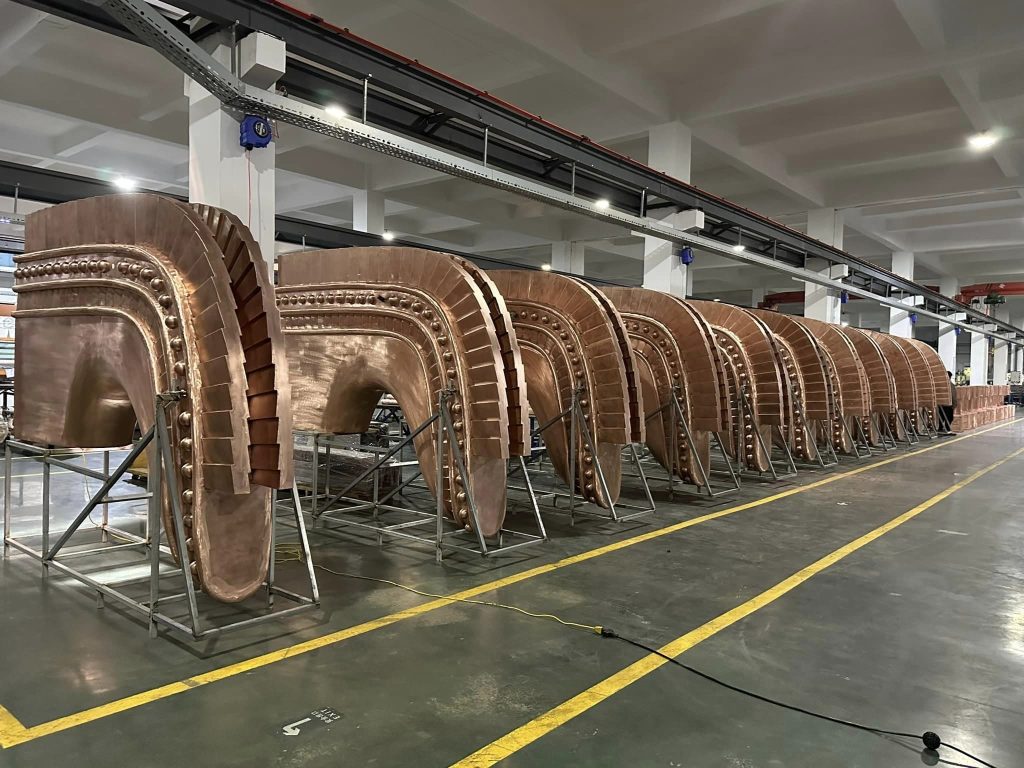
Copper Chiwen’s in production to be shipped by Gens Metal
Design and Molding: First of all, craftsmen need to draw the design of the design of a Chiwen. These patterns often contain complex ornamentation, which represents profound cultural significance. During the moulding stage, the craftsman will convert the design pattern into a specific mold shape for the subsequent casting process.
Fabrication of copper Chiwen (Shibi) by Gens Metal
Material selection: select suitable copper material. Common materials include copper, brass, bronze, etc., which are widely used for architectural decoration due to their good ductility and corrosion resistance.
Engraving and machining: The use of carving and other traditional manual techniques to carve the mold meticulously. In this step, craftsmen will use the ductility of the copper material, for ornamental carving and carving. For example, the shadow carving is a primitive technique, also known as the shadow carving, through which the outline and surface texture of the pattern are carved, the lines are simple and clear.
Shaping parts of copper Chiwen in production by Gens Metal
forming: after the carving is completed, the casting process is performed (if material is brass or bronze); The copper plate is also used for cutting, extruding and welding to create the required shape of the Chiwen, which requires a steel or aluminium alloy frame as a structural support inside the copper material.
Finishing and polishing: After forming, the finished product needs to be trimmed and polished to remove excess copper and ensure that the details of the decoration are clearly visible. This step may also involve manual refinement to achieve the final design.
Installation: After the above steps to obtain the Chiwen, need to be carefully installed. Normally, the owls are placed at the ends of the roof ridges of a building to provide decoration and ward off evil spirits, and to fit perfectly with the roof structure without damaging its strength.
In general, the craft of making the metal Chiwen integrates the quintessence of traditional handicrafts of Chinese and other oriental civilizations. Each process is full of artistry and technology, reflecting the wisdom and skill of ancient craftsmen.
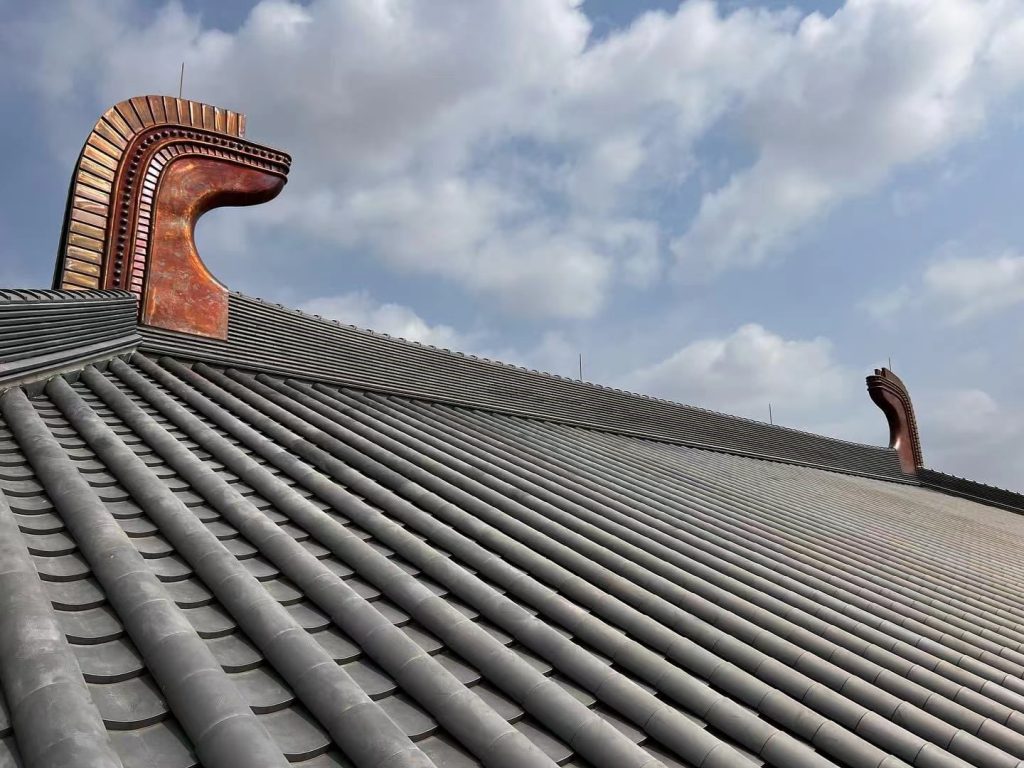
Two copper Chiwen’s (Shibi’s) installed at Maha Prajna Temple, Phnom Penh