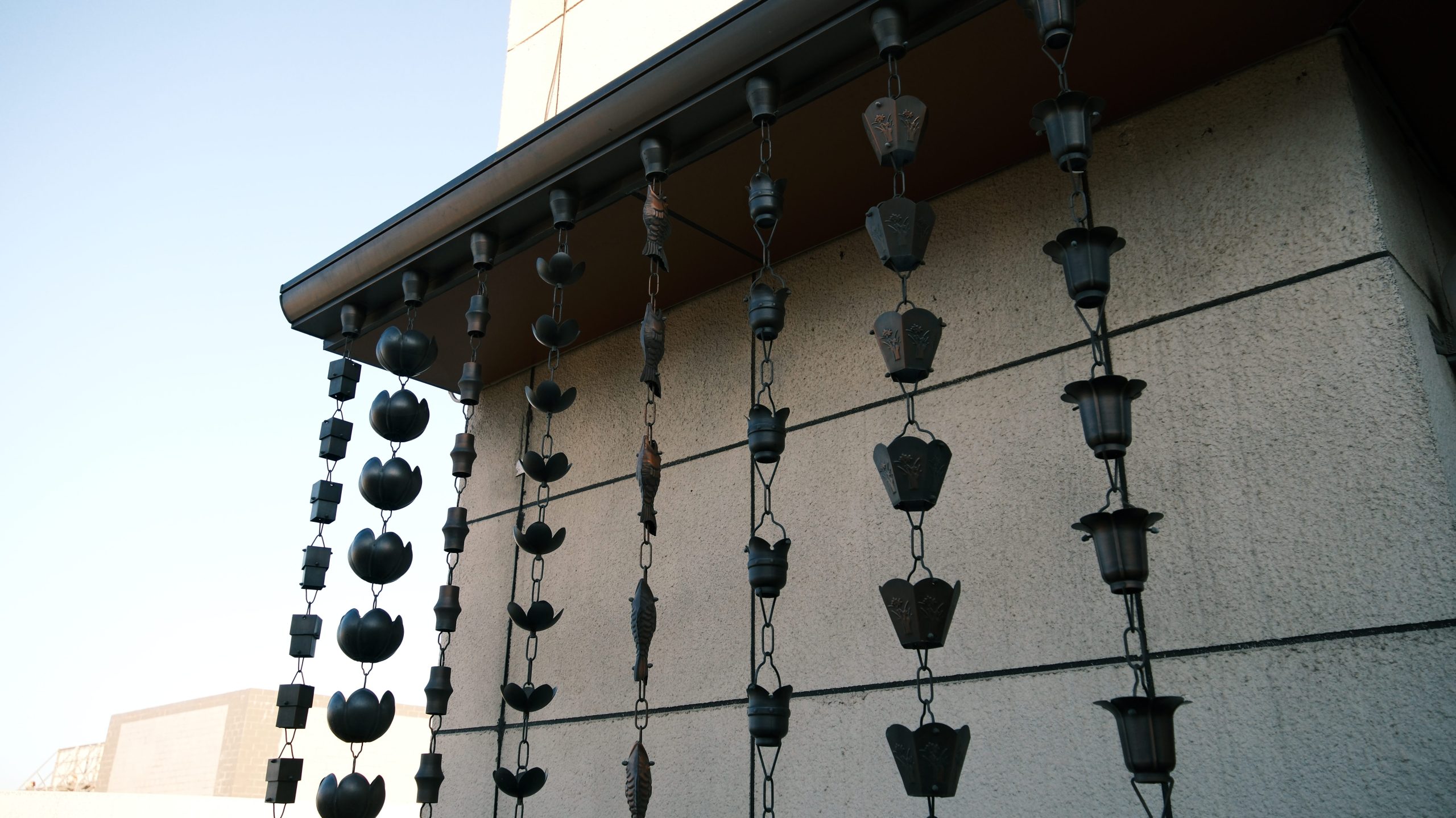
A rain chain, also known as a “kusari-doi” in its country of origin, Japan, is an alternative to the conventional downspout used to manage rainwater runoff from roofs. This decorative and functional feature not only serves a practical purpose by guiding water away from the home’s structure, but also adds an aesthetic touch to the exterior of the house.
The primary purposes of a rain chain are twofold:
- Functional: To direct rainwater from the roof’s gutter down to the ground or into a water-harvesting receptacle. This helps in preventing water damage to the roof, attic, or interior of the home.
- Decorative: To enhance the exterior appearance of the home with its unique charm, often in the form of artistic and colorful designs.
Rain chains come in various styles and colors, predominantly made from copper or other metallic materials. They can be a fun DIY project for families and are a great way to personalize the home’s exterior.
When considering the installation of a rain chain, it’s not always necessary to remove the existing downspout. If the home has a complex downspout system, it might be challenging to remove, but it’s possible to attach a rain chain using a V-shaped hook or an adapter within the gutter’s existing downspout opening.
What is the installation process?
The installation process can vary:
- If adding a rain chain alongside the gutter without removing the downspout, a small hole can be cut for hanging the chain.
- For homes without gutters, identifying the area where water accumulates the most and attaching a rain chain from a copper bucket can be an effective solution.
A rain chain can be a calming addition to the home, creating a soothing waterfall-like sound as water flows through it. It’s also a durable and long-lasting alternative to traditional gutter systems, which can be prone to damage or leaks.
For those looking for an inexpensive and easy way to enhance their outdoor space, a rain chain is an excellent option. It can be used not only on houses but also on garages and carport overhangs.
In addition to rain chains, there are several other ways to incorporate water features into outdoor spaces, such as standalone ponds, birdbaths, and fountains. These features not only add beauty and tranquility but also support local ecosystems, like attracting birds that help control insect populations in gardens.
How can I choose the right size and style of rain chain for my home’s design?
Choosing the right size and style of a rain chain for your home involves several considerations to ensure it complements your home’s design while also functioning effectively. Here’s a guide to help you make the right choice:
- Home’s Architectural Style: Consider the overall architectural style of your home. A rain chain should harmonize with the existing design elements. For example, a traditional home might look best with a classic, ornate rain chain, while a modern home could opt for a sleek, minimalist design.
- Gutter Size and Capacity: Evaluate the size and capacity of your gutters. A rain chain should be able to handle the volume of water that your gutters collect during a rainstorm. Larger gutters may require a wider or more robust rain chain to prevent overflow.
- Roof Slope: The slope of your roof can affect the flow of water and thus the choice of rain chain. A steeper roof may require a rain chain with a larger capacity or one designed to handle faster water flow.
- Color and Material: Rain chains come in various materials like copper, aluminum, and brass, and they can be found in different colors. Choose a material and color that will complement or contrast with your home’s exterior in a visually appealing way.
- Length and Design: The length of the rain chain should be appropriate for the distance from the gutter to the ground or to the water collection point. Some designs have multiple levels or links that can create a more dramatic visual effect and a soothing sound.
- Placement: Think about where you want to place the rain chain. If it’s visible from common areas like a patio or living room, you might want a design that adds to the view. If it’s in a less prominent location, functionality might be more important.
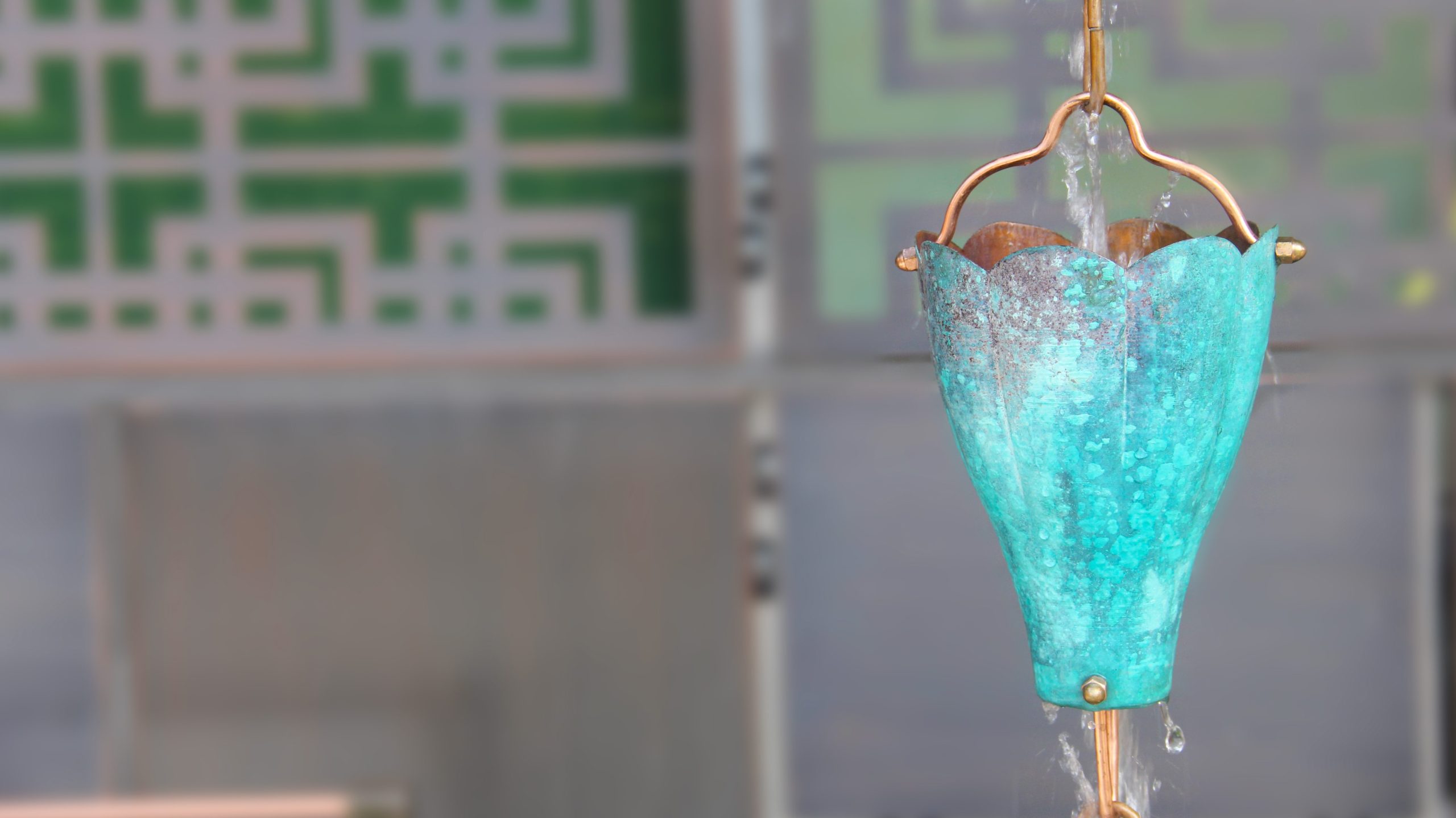
- Maintenance: Some materials, like copper, will patina over time, which can add a unique aged look but may also require occasional cleaning to maintain its appearance. Consider how much maintenance you’re willing to do.
- Water Collection: If you plan to collect rainwater, choose a rain chain that can direct water into a barrel or other collection system. Some chains are designed specifically for this purpose.
- Budget: Finally, consider your budget. Rain chains can vary in price based on material, design complexity, and size. Determine how much you’re willing to spend and find a chain that fits within your budget.
By taking these factors into account, you can select a rain chain that not only serves its functional purpose but also enhances the aesthetic appeal of your home.