
Introduction
In the world of building materials and architectural design, every detail contributes to both functionality and aesthetics. Accessories like the Golilla and Gutter Downspout Pipe Clamp, though small, play important roles in the structural integrity and appearance of piping systems. But what exactly sets these two components apart, and how do their designs and uses differ? This article delves into the unique characteristics, applications, and benefits of each, providing a comprehensive guide for homeowners, contractors, and designers alike.
Golilla: Decorative Ring for Pipe Connections
Definition and Purpose
Golilla is a circular, decorative accessory that enhances the appearance of exposed pipes, typically found at pipe joints. Its primary function is to conceal any unsightly welds or seams at pipe connections, offering a cleaner and more polished look to the entire piping system. Used primarily in exterior drainage or visible pipe installations, Golilla is essential for adding visual appeal without compromising pipe performance.

Material and Design
Golilla accessories are most commonly made from copper or zinc, allowing them to blend seamlessly with copper or zinc pipe systems. The use of these materials ensures that Golilla matches the pipe color and maintains a coordinated, cohesive look. Copper and zinc are also known for their durability and ability to withstand various weather conditions, making them ideal choices for long-lasting installations.
Golillas come in two design styles: single-layer and double-layer. The choice of design often depends on aesthetic preference and installation needs. For simpler installations or minimalistic looks, a single-layer Golilla may suffice, while double-layer designs provide added dimension and depth, enhancing the visual impact.
Key Functions and Advantages
- Enhanced Aesthetics: Golilla serves as a decorative element, covering weld marks and giving pipe connections a neat, uniform appearance.
- Material Harmony: By matching the pipe material, Golilla provides a harmonious visual effect that complements the pipe system.
- Easy Installation: The circular design allows Golilla to be easily fitted over pipe connections, simplifying the installation process.
- Applications: Golilla is ideally suited for visible piping, especially in architectural features where design and aesthetics are emphasized, such as building exteriors or visible interior piping installations.

Gutter Downspout Pipe Clamp
Definition and Purpose
A Gutter Downspout Pipe Clamp, also known as a gutter pipe clamp, is a functional accessory used to secure downspout pipes to building exteriors. Unlike Golilla, which is primarily decorative, the Gutter Downspout Pipe Clamp provides physical support, preventing pipes from shifting, swaying, or detaching during harsh weather conditions. Its sturdy construction and secure mounting ensure that downspouts remain stable, contributing to both safety and structural integrity.
Material and Design
These clamps are typically made from weather-resistant materials such as stainless steel, aluminum, or galvanized steel. These materials are chosen for their durability and resistance to rust and corrosion, especially important for outdoor installations exposed to rain, sun, and changing temperatures. The high-quality materials used in gutter pipe clamps ensure longevity, even in challenging environmental conditions.
The Gutter Downspout Pipe Clamp design features a two-part structure connected by screws and nuts, allowing for a tight and secure fit around the pipe. Additional components, such as nails or expansion bolts, help fasten the clamp to the wall, ensuring maximum stability. This design provides the necessary physical support to keep the downspout securely anchored, preventing movement or displacement.
Key Functions and Advantages
- Structural Support: Gutter pipe clamps are engineered to provide essential support, ensuring that downspouts remain securely attached to the building.
- Durability: Made from corrosion-resistant materials, these clamps are ideal for outdoor use, offering reliable performance in various weather conditions.
- Secure Installation: With screws, nuts, and expansion bolts, gutter pipe clamps offer a stable installation that withstands wind, rain, and other environmental factors.
- Applications: Gutter downspout pipe clamps are ideal for all gutter systems, especially in buildings with external downspouts requiring strong support to maintain proper drainage functionality.
Differences
Understanding the differences between Golilla and Gutter Downspout Pipe Clamp can help builders and homeowners make informed decisions based on the specific requirements of their piping systems.
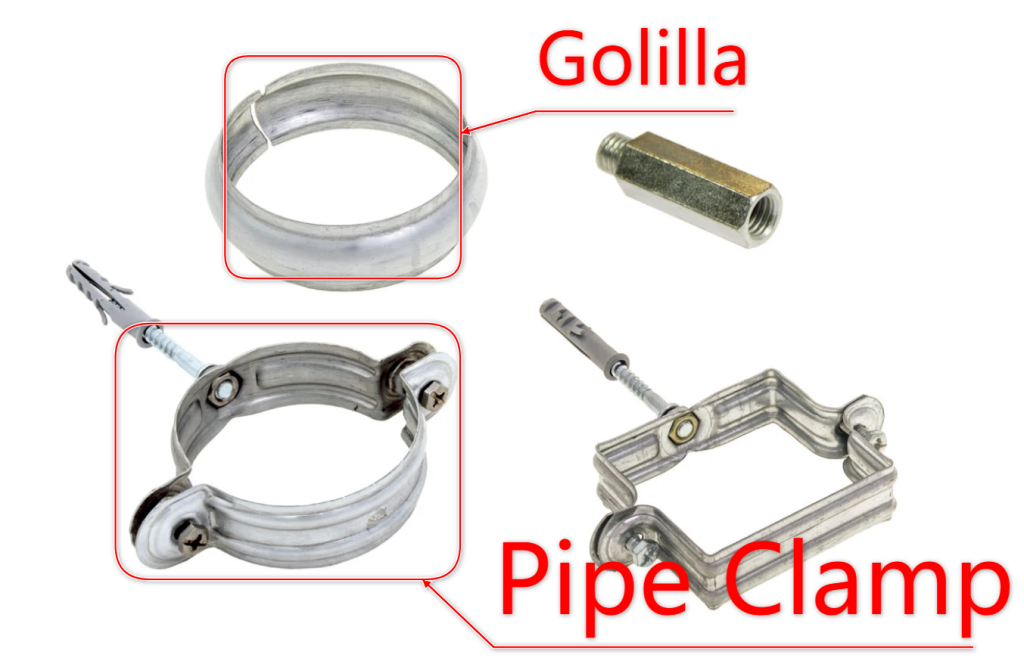
Functional Differences
The primary distinction lies in their function. Golilla is designed purely for aesthetic purposes, helping to create a polished look for pipe connections by covering weld marks. In contrast, the Gutter Downspout Pipe Clamp is a functional component that provides physical support, securing the downspout pipe to the building structure.
Application Scenarios
Golilla is commonly used at pipe joints or visible connection points, particularly in architectural designs where the appearance of the piping system is essential. It is well-suited for exposed piping in areas where aesthetics are prioritized. On the other hand, Gutter Downspout Pipe Clamps are utilized wherever downspouts need to be securely mounted to walls. This makes them essential in drainage systems where stability and weather resistance are key.
Structure and Installation
Golilla is a simple ring-like accessory that fits over pipe joints with minimal installation requirements. Gutter Downspout Pipe Clamps, however, involve more complex installation, requiring screws, nuts, and sometimes additional hardware for secure attachment. This makes Golilla a quicker, easier installation option, while gutter pipe clamps demand a more involved setup to ensure stability.
The Growing Market for Pipe Accessories
Increasing Demand for Architectural Pipe Accessories
As architectural trends increasingly focus on visible piping systems and industrial design elements, the demand for decorative accessories like Golilla has grown. In modern and industrial-style architecture, exposed pipes are often integrated into the building’s aesthetic, making decorative components essential for maintaining visual appeal.
Rising Importance of Durable Clamps in Building Construction
The Gutter Downspout Pipe Clamp market is expanding as construction standards emphasize durability and weather resistance in building materials. With an increasing number of homes and buildings implementing durable downspout systems, demand for high-quality pipe clamps is set to rise, especially in regions with severe weather conditions.
Material Advancements Driving Market Growth
Material innovation has also fueled growth in the market for pipe accessories. As materials like stainless steel and galvanized metals become more common in construction, accessories that match these materials, both in durability and appearance, are in high demand. The ability to choose between various materials allows builders to select options that meet both aesthetic and functional requirements.
Conclusion
Both Golilla and Gutter Downspout Pipe Clamps serve unique purposes, with distinct applications and benefits. For those focused on enhancing the visual appeal of exposed piping, Golilla provides a simple, elegant solution for concealing weld marks and creating a refined look. In contrast, Gutter Downspout Pipe Clamps are essential for providing structural support, ensuring the stability and safety of downspout systems attached to building exteriors.
Understanding these differences allows architects, builders, and homeowners to choose the right accessory for their needs, contributing to both the beauty and functionality of their piping systems. As trends in architecture continue to evolve, accessories like Golilla and Gutter Downspout Pipe Clamps will remain valuable components in both residential and commercial construction, meeting demands for aesthetic appeal, stability, and durability.


